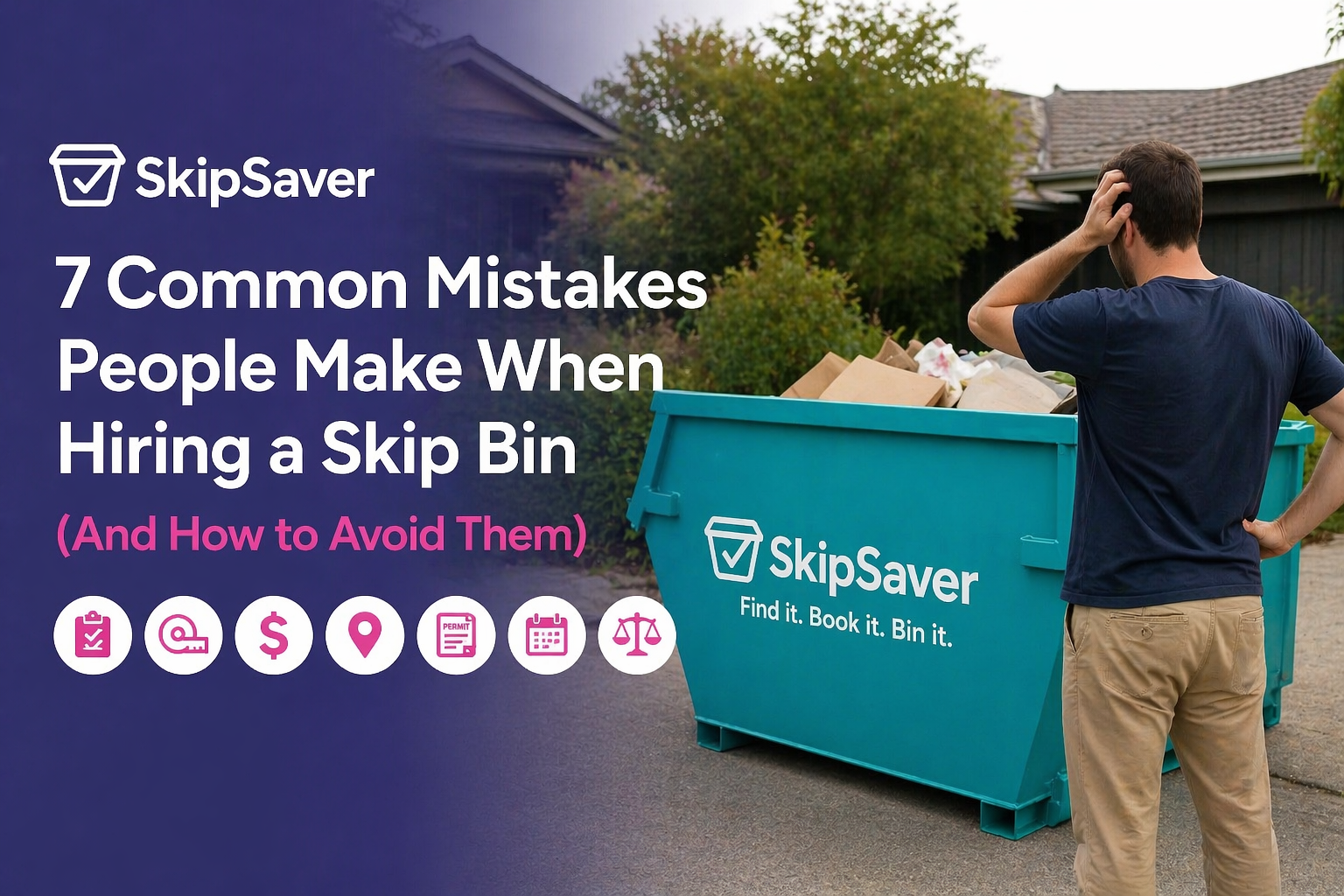
7 Common Mistakes People Make When Hiring a Skip Bin (And How to Avoid Them)

Hiring a skip bin is one of the easiest ways to manage waste during a clean-up or renovation — but a few simple mistakes can make the process more expensive or stressful than it needs to be.

Here are the most common skip bin mistakes people make across Australia — and how you can avoid them.


1. Choosing the wrong size bin

This is the most common issue.

If the bin is too small:

  • you may need a second delivery
  • your project slows down
  • costs increase

Tip: When in doubt, go slightly bigger. It’s usually cheaper than ordering two bins.


2. Mixing different waste types

Some materials must stay separate, including:

  • bricks
  • soil
  • green waste
  • general household waste

Mixing them can increase disposal costs or require re-sorting.

Always check your waste type before booking.


3. Overfilling the skip bin

Skip bins cannot be collected if waste sticks out above the rim.

Overfilling can lead to:

  • extra fees
  • delayed pickup
  • safety risks during transport

Spread waste evenly and stop at the fill line.


4. Blocking delivery access

Before delivery day, make sure:

✔ driveway access is clear
✔ vehicles are moved
✔ overhead wires are considered
✔ gates are wide enough

This helps drivers place the bin exactly where you want it.


5. Booking too late during busy periods

Skip bins are in high demand during:

  • school holidays
  • long weekends
  • renovation season
  • spring garden clean-ups 🌿

Booking early gives you better availability and pricing.


6. Forgetting council verge placement rules

If the skip bin goes on public land (like the verge), some councils may require approval.

Placing bins on your driveway usually avoids this.


7. Not comparing suppliers before booking

Prices can vary depending on:

  • location
  • waste type
  • bin size
  • availability

Comparing options helps you find the best match faster and often saves money.

SkipSaver makes this easy by connecting you with trusted local skip bin providers across Australia.


Final tip before you book

Choosing the right bin size and waste type from the start makes your clean-up faster, cheaper, and easier.

Visit www.skipsaver.com.au to compare skip bin options near you in minutes. 🚛
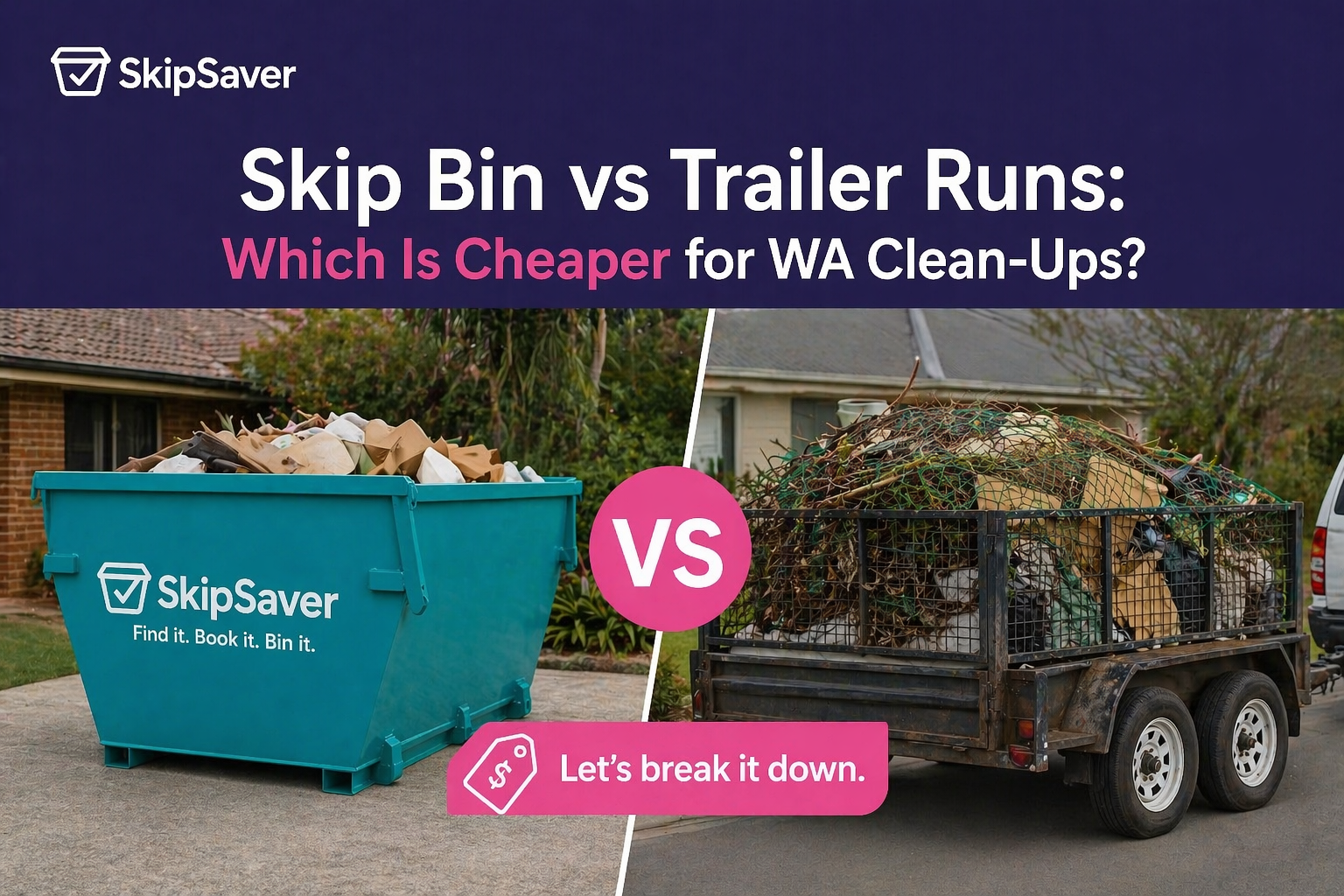
Skip Bin vs Trailer Runs: Which Is Cheaper for WA Clean-Ups?

If you’re planning a clean-up, you might wonder:

Should I hire a skip bin — or just do a few trailer runs to the tip?

The answer depends on how much waste you have, but in many cases a skip bin saves both time and money.

Let’s compare both options.


Cost comparison

Trailer runs often seem cheaper at first, but the real costs add up:

Trailer runs may include:

  • fuel
  • tip fees
  • multiple trips
  • trailer hire (if you don’t own one)
  • your time

Skip bins usually include:

  • delivery
  • pickup
  • disposal
  • single booking convenience

For medium-to-large clean-ups, skip bins are often the better value option.


Time saved

One trailer load rarely finishes the job.

Most households need:

2–5 tip runs for a typical clean-up

A skip bin lets you:

✔ load waste gradually
✔ work at your own pace
✔ avoid waiting at the tip

This is especially helpful during renovations or garden projects.


Easier for heavy materials

If you’re disposing of:

  • soil
  • bricks
  • tiles
  • concrete
  • old furniture

Trailer loading becomes harder and slower.

Skip bins are designed specifically for heavy waste removal.


Less stress during renovations

Renovations already create enough disruption.

A skip bin keeps waste contained in one place instead of piling up around your home.

This improves:

  • safety
  • organisation
  • workflow efficiency

When trailer runs do make sense

Trailer trips can work well for:

✔ very small clean-ups
✔ single-item disposal
✔ quick garden tidy-ups

But once waste starts piling up, a skip bin quickly becomes the easier solution.


The smarter option for most projects

For most household clean-ups in Western Australia, skip bins save:

  • time
  • effort
  • multiple trips
  • unexpected disposal costs

SkipSaver helps you compare local skip bin providers quickly so you can choose the right option for your project with confidence.

Visit www.skipsaver.com.au to get started today. ♻️

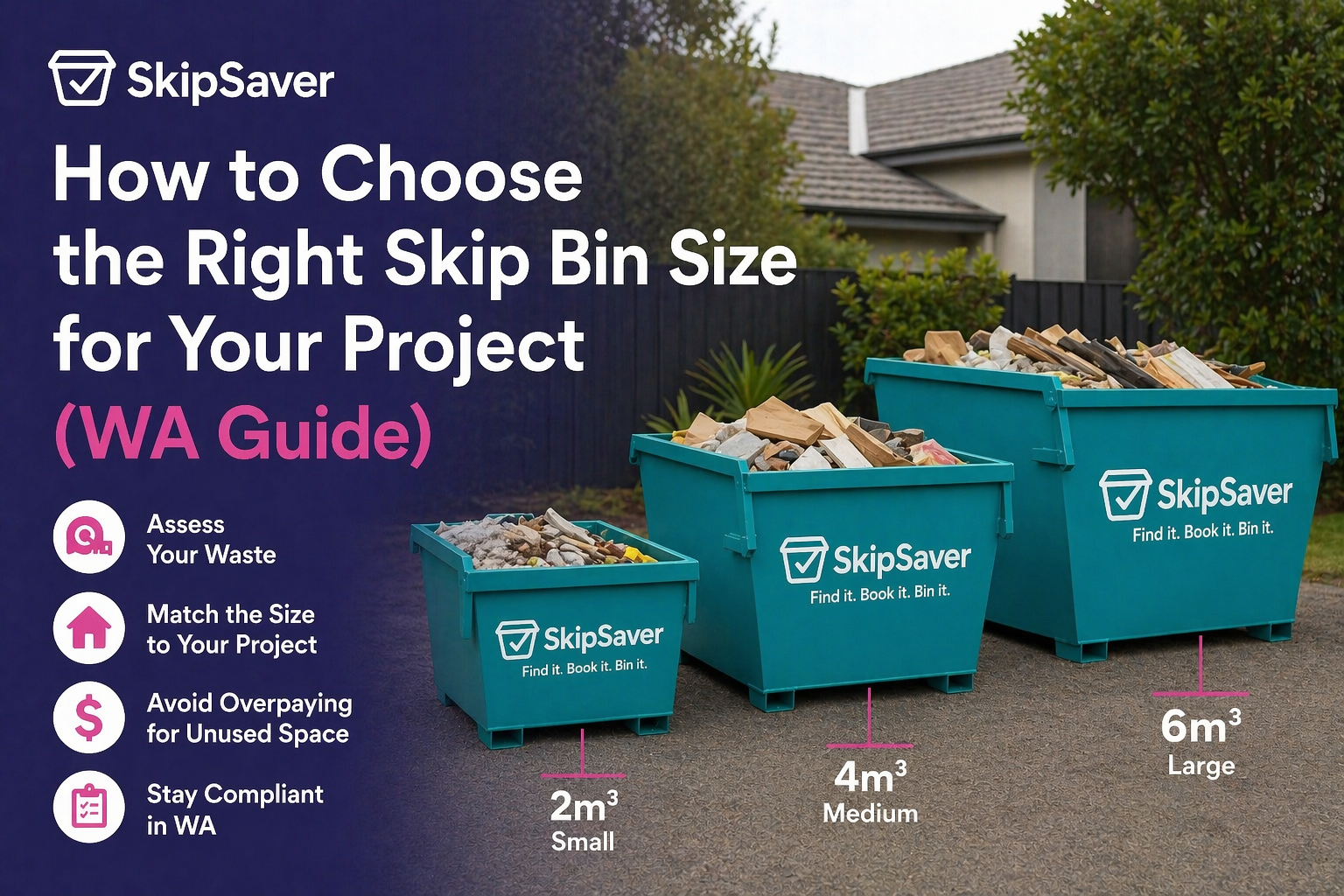
How to Choose the Right Skip Bin Size for Your Project (WA Guide)

How to Compare Skip Bin Sizes for Your Project

Hiring a skip bin is one of the easiest ways to manage waste during a clean-up, renovation, or landscaping job — but choosing the right size can feel confusing.

Too small and you’ll need another bin. Too big and you may spend more than necessary.

Here’s a simple guide to help you choose the right skip bin the first time.


1. Small clean-ups (2–3m³ bins)

Best for:

  • Garage clean-outs
  • Decluttering before moving
  • Small garden tidy-ups
  • General household rubbish

These bins are perfect if you’re doing a quick refresh around the house. They fit easily in most driveways and are the most budget-friendly option.


2. Medium projects (4–6m³ bins)

Best for:

  • Kitchen or bathroom renovations
  • Larger yard clean-ups
  • Moving house
  • Removing old furniture

This is the most popular skip size for households across Western Australia because it suits most renovation and clean-up jobs.


3. Large renovations & construction (8m³+ bins)

Best for:

  • Major renovations
  • Roof replacements
  • Landscaping projects
  • Construction waste

If you’re generating heavy or bulky materials, a larger bin can save time and multiple bookings.


4. Things many people forget before booking a skip bin

Before ordering your bin, consider:

✔ What type of waste you’re disposing of
✔ How much space you have for delivery
✔ How long you’ll need the bin
✔ Whether your waste includes heavy materials like bricks or soil

Planning ahead helps avoid delays and unexpected costs.


5. Why comparing skip bin providers saves money

Prices can vary depending on:

  • Location
  • Waste type
  • Bin size
  • Availability

Instead of calling multiple companies, comparing options online helps you find the best fit faster and often cheaper.

That’s exactly what SkipSaver was designed to do — connect you with trusted local suppliers so you can book the right bin quickly and confidently.


Ready to book the right skip bin?

Whether you’re tackling a weekend clean-up or a full renovation project, choosing the correct bin size makes everything easier.

Visit www.skipsaver.com.au to compare skip bin options near you and book in minutes. 🚛♻️

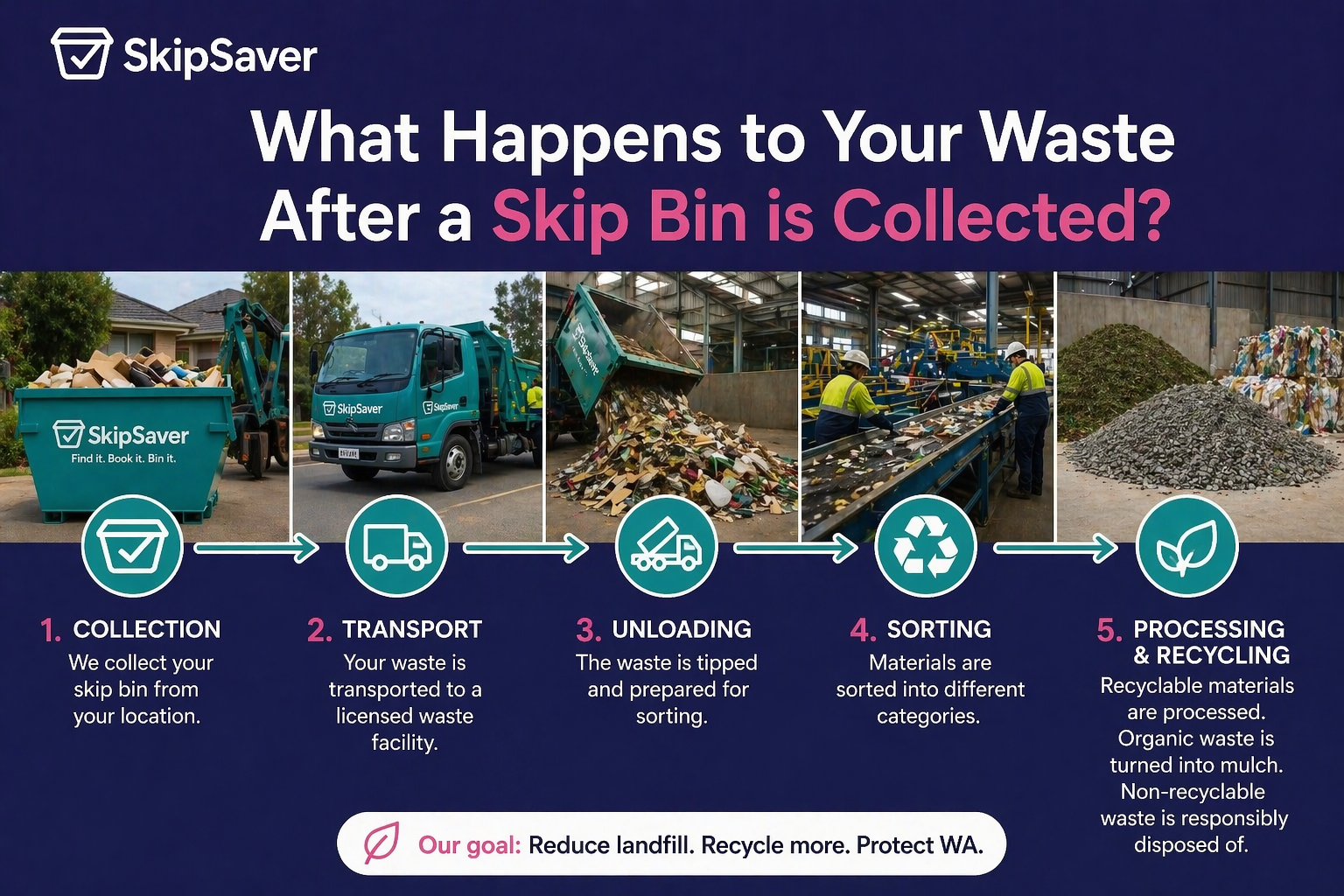
What Happens to Your Waste After a Skip Bin is Collected?

When you book a skip bin waste collection in Perth, have you ever wondered what actually happens to your rubbish? It’s a question more people are asking as environmental awareness grows — and the answer might surprise you. Modern waste management is far more sophisticated than simply dumping everything in a hole in the ground.

The Journey Begins: Collection and Transport – How Skip Bin Waste is Handled

Once your skip bin is full, the SkipSaver team collects it and transports it to a licensed waste transfer station. This first step is more important than it might seem — safe and efficient transport ensures that waste doesn’t spill, leak, or cause environmental harm along the way.

At the transfer station, your skip bin is unloaded and the real sorting process begins.

Sorting: The Key to Reducing Landfill

Not all waste is the same, and treating it that way wastes enormous potential. At the transfer station, waste is separated into distinct streams:

  • Organic waste – food scraps, garden clippings, timber offcuts
  • Recyclables – metals, concrete, bricks, glass, cardboard, and certain plastics
  • General waste – materials that cannot currently be recycled or composted

This sorting process is critical. By diverting as much material as possible away from landfill, waste management companies reduce the environmental footprint of every single bin collected.

Where Does Each Waste Type End Up?

Organic Waste

Garden waste, untreated timber, and food organics are typically sent to composting or mulching facilities. Here, they are broken down into nutrient-rich compost or mulch that gets used in agriculture, landscaping, and horticulture — giving your old garden clippings a new life in someone else’s garden.

Recyclable Materials

Metals like steel and aluminium are among the most valuable recyclables — they can be melted down and reused almost indefinitely. Concrete and bricks are often crushed into road base or fill material used in construction projects. Cardboard and paper are baled and sent to paper mills, while glass is processed into new glass products or road aggregate.

General Waste

Materials that can’t be recycled or composted are sent to licensed landfill facilities. Modern landfills are carefully engineered to minimise groundwater contamination and capture methane gas, which can be converted into energy. While landfill is the least desirable outcome, responsible operators ensure it’s managed as safely as possible.

SkipSaver’s Commitment to Responsible Waste Management

At SkipSaver, we take our environmental responsibilities seriously. We work with licensed waste facilities across Perth to ensure your waste is handled in a way that maximises recycling and minimises landfill wherever possible. When you hire a skip bin from SkipSaver, you’re not just getting a convenient way to clear out your property — you’re choosing a service that genuinely cares about what happens next.

We serve customers across Perth and the surrounding areas, and we’re proud to offer skip bins that suit everything from small home cleanouts to large construction and demolition projects.

Ready to Book a Skip Bin?

If you’re tackling a renovation, declutter, or building project and need a reliable skip bin hire service in Perth, get in touch with the SkipSaver team today. We offer competitive pricing, flexible sizing options, and a commitment to responsible waste disposal.