The Weekend DIY Guide to Small Skip Bin Hire

Saturday morning, coffee in hand, and a list of jobs that has been growing for months: the shed, the spare room, that pile of old pavers behind the garage. A weekend project is the perfect time to finally get on top of it, and a small skip bin is often the easiest way to make the rubbish disappear when you’re done.

Here’s what you need to know to get the right small skip, avoid surprise fees and finish the job without a single trip to the tip.

What counts as a “small” skip bin?

Most Australian suppliers class bins from about 2 to 4 cubic metres as small. To put that in perspective, a 2m³ bin holds roughly the same as two to three box-trailer loads, and a 4m³ bin is closer to five or six.

  • 2m³: a single room declutter, a small garden tidy-up or clearing out a laundry.
  • 3m³: a bathroom strip-out, a shed clean-out or a medium garden job.
  • 4m³: a small kitchen reno, a garage clean-out or a combination of jobs.

Not sure which one you need? Our guide to choosing the right skip bin size walks you through it.

Why a small skip beats the trailer

Borrowing a trailer sounds cheap until you add up fuel, tip fees, your time and the back-breaking job of unloading it again. A skip lets you load as you go, at your own pace, and someone else takes it away when you’re finished. We’ve compared the costs in skip bins vs trailer runs.

Plan your weekend in four steps

  1. Book early in the week. Weekend delivery slots fill fast, especially in spring and summer. Booking by Wednesday gives you the best choice of suppliers and prices.
  2. Pick your spot. Choose a flat, hard surface with easy truck access, usually the driveway. If the bin has to go on the verge or road, check with your local council first, as a permit may be needed.
  3. Sort before you load. Pull out anything that can be donated, sold or recycled. You’ll free up space in the bin and give your stuff a second life.
  4. Know what can’t go in. Asbestos, paint, gas bottles, batteries, tyres, electronics and chemicals are almost always banned. Check the supplier’s list before you start.

Loading tips that save space (and money)

  • Break down boxes and flat-pack furniture.
  • Put heavy, flat items on the bottom and fill the gaps with smaller rubbish.
  • Never fill above the rim. Overfilled bins can’t legally be transported, and you may be charged extra or asked to remove the excess.

What does a small skip cost?

Prices vary by location, bin size, waste type and hire length, so the best way to know is to compare. Two quotes for the same bin in the same suburb can be surprisingly different, which is exactly why we built SkipSaver.

Compare skip bin quotes in minutes

SkipSaver lets you compare prices from local skip bin suppliers and book online in a few clicks. No phone tag, no guesswork. Get your free quotes now.

Green Waste Bins vs. General Rubbish Skip Hire for South Perth Gardens

Tackling a major garden overhaul, seasonal yard cleanup, or landscaping redesign in vibrant suburbs like Como, Manning, or South Perth generates an immense volume of organic debris and unwanted household items. When local council verge collections or standard fortnightly wheelie bins fall short of your project timeline, property owners must evaluate the most efficient waste removal pathway. Specifically, choosing between a dedicated green waste bin and general rubbish skip hire is critical for keeping your project on track.

Selecting the correct disposal method prevents costly project delays, keeps your yard tidy and safe, and ensures you comply with local environmental regulations. Understanding how these two distinct container options differ in volumetric capacity, environmental processing, waste classification, and overall management is vital for any South Perth homeowner planning a weekend renovation or landscaping transformation.

The Landscape of Waste Generation in South Perth Gardens

South Perth is renowned for its leafy residential streets, established gardens, and stunning outdoor living spaces. However, maintaining these lush environments requires ongoing pruning, planting, and clearing. Whether you are dealing with towering eucalyptus trees dropping heavy branches, sprawling hedges blocking walkways, or turf that needs replacing, the volume of organic matter can quickly overwhelm domestic bins.

When garden projects expand to include patios, old decking, or broken landscaping features, the complexity of waste management multiplies. Homeowners frequently find themselves staring at a chaotic pile of mixed debris, unsure whether an organic-only container or a general mixed waste option will serve them best. Making the wrong choice can lead to rejected loads, heavy contamination fees, or wasted effort sorting items that could have been handled more efficiently from the start.

Understanding Green Waste Bins and Organic Disposal

A dedicated green waste container is engineered exclusively for organic, biodegradable matter sourced directly from your yard. These bins are heavily favoured by local gardeners, landscapers, and eco-conscious homeowners because the contents are diverted entirely away from general landfill. Instead, the collected organic material is transported to specialised recycling facilities where it is shredded and processed into nutrient-rich mulch, compost, or soil conditioners used in local agriculture and public parks.

Acceptable Materials for Organic Containers

  • Tree branches, twigs, hedge trimmings, and shrub prunings
  • Lawn clippings, fallen leaves, weeds, and garden trimmings
  • Palm fronds, banana leaves, and unpotted plants
  • Untreated timber off-cuts, untreated fence palings, and clean bark

Strict Limitations and Contamination Risks

The primary operational constraint of a dedicated organic container is its zero tolerance for contamination. Tossing in general household rubbish, plastic plant pots, garden hoses, synthetic turf, or heavy soil-laden root balls can cause the entire load to be rejected at the sorting facility. Recycling operators reject contaminated loads because plastic and rubble ruin the quality of the commercial compost, leading to steep penalty fees for the customer.

Understanding General Rubbish Skip Hire and Mixed Waste

If your weekend project involves a comprehensive property makeover where you are tearing out an old timber deck, clearing broken terracotta pots, replacing worn-out reticulation piping, and pruning overgrown trees all at once, a general bin hire perth service is often the most practical route. General waste containers accommodate a wide variety of domestic and light commercial items that cannot be sorted into single-stream recycling streams.

Acceptable Materials for General Waste Containers

  • General household clean-out junk, old toys, and worn-out furniture
  • Broken plastic items, damaged plant pots, and discarded hoses
  • Mixed trade waste, cardboard packaging, and general site debris
  • A combination of green waste and miscellaneous household clutter

Strict Limitations and Prohibited Items

General rubbish containers prohibit hazardous materials such as asbestos, household chemicals, wet paint, gas bottles, and automotive batteries. Furthermore, heavy inert materials like dense clay, pure sand, and large volumes of bricks require specific heavy-waste or masonry-only bins rather than standard mixed general containers, as excess weight makes transport illegal and unsafe.

Side-by-Side Comparison for Garden and Landscape Projects

Feature / Factor Dedicated Green Waste Skip General Rubbish Skip Hire
Primary Waste Focus 100% organic, compostable plant matter and yard debris Mixed domestic junk, garden waste, and non-organic items
Environmental Impact High diversion rate into industrial composting and mulch production Processed via mixed waste sorting facilities or general landfill
Contamination Risk High penalty risk if plastic, dirt, or household trash is included Lower risk, provided hazardous items and heavy inert earth are excluded
Ideal Project Type Pruning, hedge trimming, tree lopping, and seasonal garden clear-outs Landscaping tear-outs combining old structures, pots, and plants


Strategic Factors to Consider Before Booking Your Container

Evaluating the true scope of your garden project will point you toward the most cost-effective and efficient option. Consider the following steps before finalising your reservation:

1. Conduct a Thorough Waste Composition Audit

Walk your yard and look closely at every item you plan to throw away. If your debris consists purely of organic plant matter, branches, and grass clippings, a specialised green waste container is faster, cleaner, and environmentally superior. However, if you are dismantling a garden shed, throwing away rotten timber frames, or discarding plastic edging alongside your tree trimmings, a mixed general container is essential.

2. Assess Weight and Density Constraints

Heavy loads like wet clay soil, dense turf, and massive tree root balls require specialised handling. Standard general or green waste containers have strict weight thresholds to comply with transport regulations. Ensure you communicate the exact nature and density of your debris to your hire provider so they supply a bin rated for that specific weight limit.

3. Review Placement and Local Access Rules

If your container cannot fit comfortably on your private driveway and must sit on a public verge within the City of South Perth, ensure you understand local council placement guidelines. Coordinating with your provider to manage any required local government approvals ensures your project proceeds without regulatory interruption.

Maximising Value and Space in Your Waste Container

Once your container is delivered, efficient loading techniques can save you both time and money. Poorly stacked branches and loose materials create massive air pockets, forcing you to order a larger size than necessary.

  • Break Down Bulky Branches: Use loppers or a chainsaw to cut long, unruly branches into shorter, manageable lengths so they pack tightly together.
  • Layer Smartly: Place heavier, flatter items at the very bottom of the container to create a stable foundation, then pack lighter foliage and trimmings on top.
  • Keep Debris Clean: Shake loose dirt off roots and garden tools before loading to maintain compliance and avoid unnecessary weight surcharges.

By carefully evaluating your project scope, understanding material classifications, and packing your container strategically, you can complete your South Perth garden transformation smoothly, affordably, and sustainably.
Where Can I Find an Affordable Skip Bin Hire in Rockingham and Surrounds?

Tackling a major spring clean-up, extensive landscaping project, or home renovation across Rockingham and its surrounding southern suburbs generates a significant amount of unwanted material. From clearing out established coastal properties in Safety Bay and Shoalwater to managing new-build construction waste in sprawling residential growth corridors like Baldivis, securing reliable waste management is essential. Finding affordable skip bin hire Rockingham services ensures your property stays clean, organised, and within budget without running into unnecessary logistical hurdles.

Navigating the local waste market effectively requires understanding where to source robust containers, how pricing structures operate, and what regulatory guidelines apply across the City of Rockingham. Knowing these details prevents unexpected delays and helps you secure the best value for your specific property type. Whether you are a seasoned contractor or a weekend warrior tackling a DIY makeover, mastering the logistics of local waste removal transforms a stressful job into a smooth, manageable process.

Exploring the Rockingham Waste Market and Local Geography

The City of Rockingham features a diverse mix of established coastal suburbs, semi-rural blocks, and rapidly expanding residential developments. Because the region spans a wide geographic area—stretching from East Rockingham down to Port Kennedy, Secret Harbour, Safety Bay, and Golden Bay—availability and delivery logistics can vary slightly depending on your exact postcode.

Local waste operators and regional transport providers service these areas regularly, offering a broad spectrum of container capacities. Whether you require a compact mini bin for a simple garage clean-out or a heavy-duty container for structural demolition debris, matching your project scope to a local provider ensures prompt delivery and collection. Understanding how local transport routes operate across the southern corridor allows you to book containers at times that avoid peak traffic hours, ensuring your delivery arrives precisely when scheduled.

Key Factors That Influence Your Quote and Availability

While property owners naturally search for cost-effective solutions, several operational elements shape the final cost of skip bin hire prices across the region. Familiarising yourself with these variables ensures you can plan your budget accurately before making a booking.

1. Container Volume and Physical Dimensions

Capacities range from small mini bins up to massive walk-in units designed for bulk waste. Selecting the correct size the first time prevents the need to order a second container, which doubles your transport fees. Accurately assessing whether your project requires a compact unit or a large-scale bin is the single most effective way to control costs.

2. Waste Classification and Sorting Requirements

Mixed general household rubbish, green organic waste, and heavy inert materials (such as bricks, tiles, sand, and concrete) are processed differently at local facilities like the Millar Road Landfill in Baldivis. Heavy loads require custom bins to comply with strict transport weight limits, preventing overloading fines and ensuring road safety.

3. Hire Duration and Extension Policies

Standard hire agreements typically cover a set number of calendar days. If your project runs over schedule due to bad weather or unexpected delays, daily extension fees may apply, making upfront scheduling critical to your overall financial plan.

Understanding Local Council Permit Regulations

Where you choose to place your waste container dictates whether you need formal approval from local municipal authorities. Knowing the rules before the delivery truck arrives saves you from potential fines or having to halt your project.

Placing Bins on Private Property

If your container sits entirely within your private property boundaries, such as a paved driveway or a reinforced front lawn, no council permit is required. Many properties across Rockingham and Baldivis feature generous driveways or front setbacks that easily accommodate delivery trucks without disrupting neighbours or public spaces.

Placing Bins on Public Land and Verges

If space is tight and the container must sit on a public verge, footpath, or roadway, you must secure approval from the City of Rockingham. Local regulations ensure containers do not block pedestrian access, obscure motorist sightlines, or restrict neighbouring driveway access. Most established local hire providers are familiar with these municipal rules and can assist in managing permit applications on your behalf for a small administration fee.

Prohibited Items to Keep Out of Your Skip Bin

To avoid heavy contamination penalties or total refusal of collection by local sorting yards, ensure your load strictly excludes restricted materials. Disposing of hazardous waste improperly poses severe environmental and safety risks.

  • Asbestos: Strictly prohibited from standard general bins. Western Australia permits homeowners to handle small, specific quantities of bonded asbestos under strict safety guidelines, but large volumes require licensed professional removalists.
  • Hazardous Liquids and Chemicals: Wet paint, industrial solvents, gas bottles, and chemical containers must never go into a skip. These require drop-off at designated hazardous waste facilities.
  • Electronic Waste and Batteries: E-waste, car batteries, and fluorescent tubes must be recycled through proper electronic waste channels rather than landfilled with household junk.

Strategies for Securing Cost-Effective Waste Removal

Maximising your budget when ordering a bin involves implementing a few smart, practical steps before the container even arrives at your property:

  • Segregate Your Waste Streams: Keeping green waste completely separate from general rubbish or heavy inert materials often unlocks lower processing rates at local recycling depots, as single-stream sorting is faster and more efficient.
  • Break Down Bulky Items: Dismantling old furniture, flattening cardboard boxes, and cutting down unruly branches ensures you utilise every cubic metre efficiently, preventing the need to upgrade to a larger, costlier size.
  • Compare Local Options: Checking rates across established local yards that service your specific postcode ensures you secure competitive pricing tailored to the southern corridor.

Ultimately, securing affordable waste management in Rockingham comes down to careful planning, accurate volume estimation, and a clear understanding of local guidelines. By taking the time to evaluate your project scope, respecting material prohibitions, and choosing a reliable local provider, you can complete your clean-up or renovation efficiently while keeping your budget entirely under control.

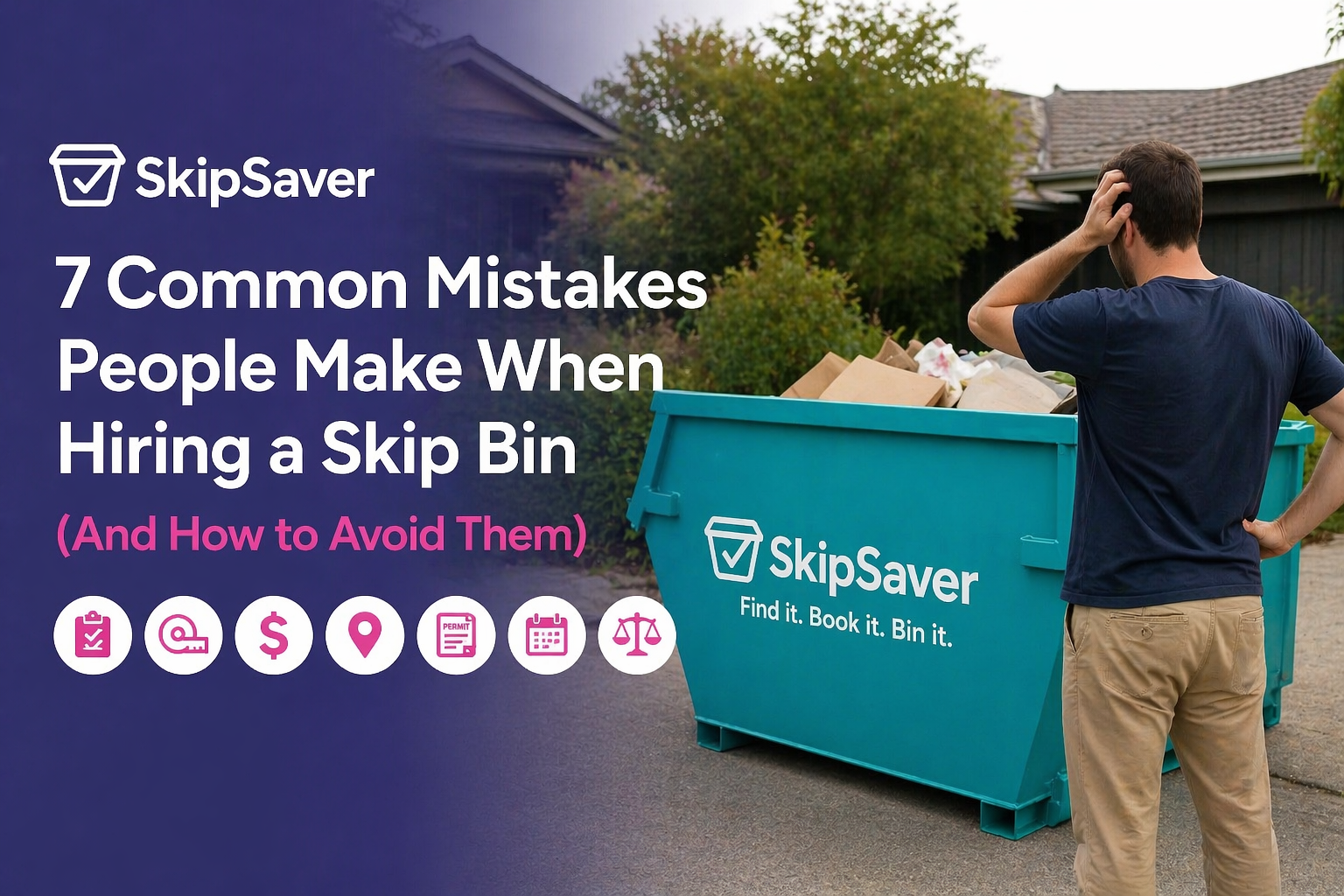
7 Common Mistakes People Make When Hiring a Skip Bin (And How to Avoid Them)

Hiring a skip bin is one of the easiest ways to manage waste during a clean-up or renovation — but a few simple mistakes can make the process more expensive or stressful than it needs to be.

Here are the most common skip bin mistakes people make across Australia — and how you can avoid them.


1. Choosing the wrong size bin

This is the most common issue.

If the bin is too small:

  • you may need a second delivery
  • your project slows down
  • costs increase

Tip: When in doubt, go slightly bigger. It’s usually cheaper than ordering two bins.


2. Mixing different waste types

Some materials must stay separate, including:

  • bricks
  • soil
  • green waste
  • general household waste

Mixing them can increase disposal costs or require re-sorting.

Always check your waste type before booking.


3. Overfilling the skip bin

Skip bins cannot be collected if waste sticks out above the rim.

Overfilling can lead to:

  • extra fees
  • delayed pickup
  • safety risks during transport

Spread waste evenly and stop at the fill line.


4. Blocking delivery access

Before delivery day, make sure:

✔ driveway access is clear
✔ vehicles are moved
✔ overhead wires are considered
✔ gates are wide enough

This helps drivers place the bin exactly where you want it.


5. Booking too late during busy periods

Skip bins are in high demand during:

  • school holidays
  • long weekends
  • renovation season
  • spring garden clean-ups 🌿

Booking early gives you better availability and pricing.


6. Forgetting council verge placement rules

If the skip bin goes on public land (like the verge), some councils may require approval.

Placing bins on your driveway usually avoids this.


7. Not comparing suppliers before booking

Prices can vary depending on:

  • location
  • waste type
  • bin size
  • availability

Comparing options helps you find the best match faster and often saves money.

SkipSaver makes this easy by connecting you with trusted local skip bin providers across Australia.


Final tip before you book

Choosing the right bin size and waste type from the start makes your clean-up faster, cheaper, and easier.

Visit www.skipsaver.com.au to compare skip bin options near you in minutes. 🚛

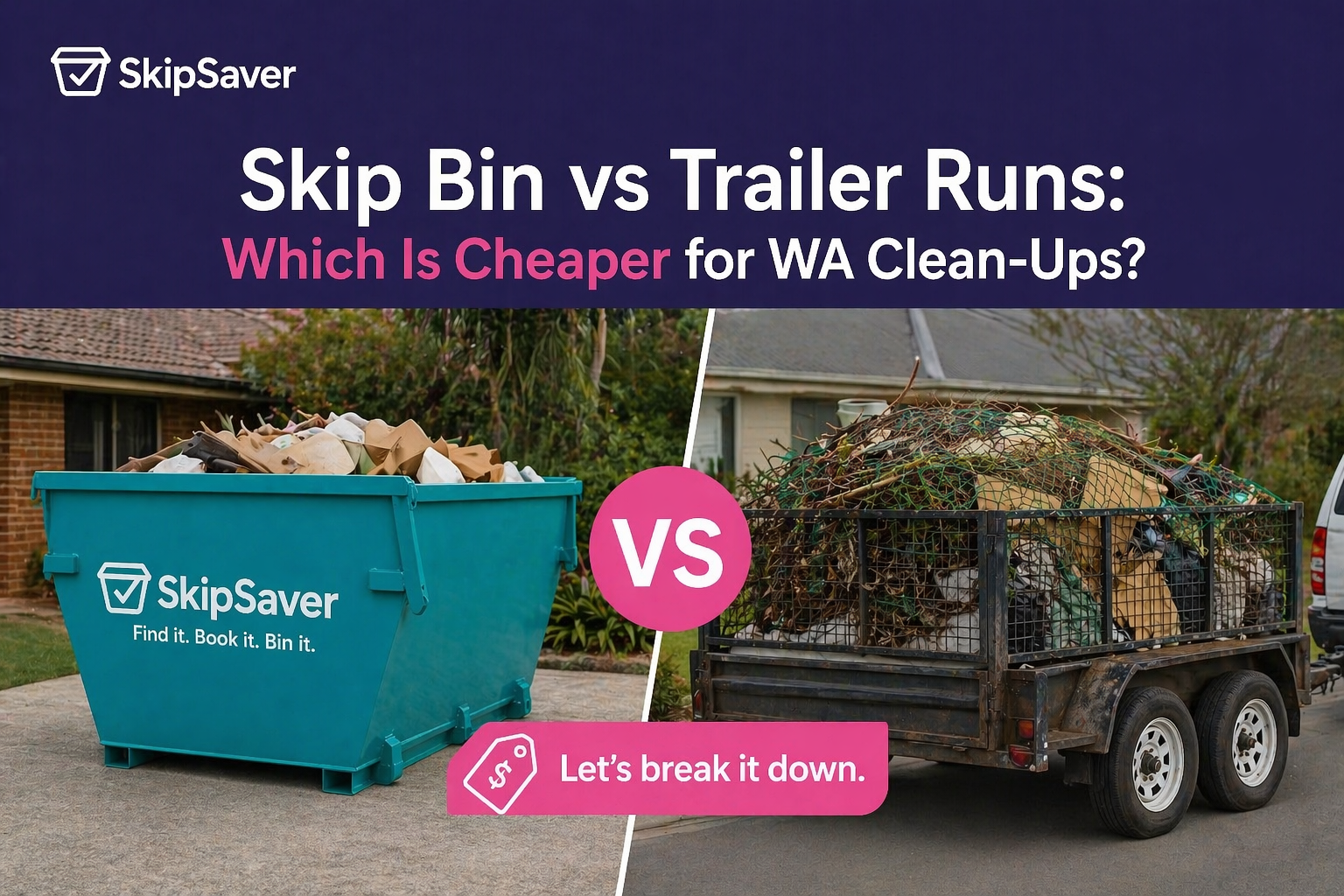
Skip Bin vs Trailer Runs: Which Is Cheaper for WA Clean-Ups?

If you’re planning a clean-up, you might wonder:

Should I hire a skip bin — or just do a few trailer runs to the tip?

The answer depends on how much waste you have, but in many cases a skip bin saves both time and money.

Let’s compare both options.


Cost comparison

Trailer runs often seem cheaper at first, but the real costs add up:

Trailer runs may include:

  • fuel
  • tip fees
  • multiple trips
  • trailer hire (if you don’t own one)
  • your time

Skip bins usually include:

  • delivery
  • pickup
  • disposal
  • single booking convenience

For medium-to-large clean-ups, skip bins are often the better value option.


Time saved

One trailer load rarely finishes the job.

Most households need:

2–5 tip runs for a typical clean-up

A skip bin lets you:

✔ load waste gradually
✔ work at your own pace
✔ avoid waiting at the tip

This is especially helpful during renovations or garden projects.


Easier for heavy materials

If you’re disposing of:

  • soil
  • bricks
  • tiles
  • concrete
  • old furniture

Trailer loading becomes harder and slower.

Skip bins are designed specifically for heavy waste removal.


Less stress during renovations

Renovations already create enough disruption.

A skip bin keeps waste contained in one place instead of piling up around your home.

This improves:

  • safety
  • organisation
  • workflow efficiency

When trailer runs do make sense

Trailer trips can work well for:

✔ very small clean-ups
✔ single-item disposal
✔ quick garden tidy-ups

But once waste starts piling up, a skip bin quickly becomes the easier solution.


The smarter option for most projects

For most household clean-ups in Western Australia, skip bins save:

  • time
  • effort
  • multiple trips
  • unexpected disposal costs

SkipSaver helps you compare local skip bin providers quickly so you can choose the right option for your project with confidence.

Visit www.skipsaver.com.au to get started today. ♻️

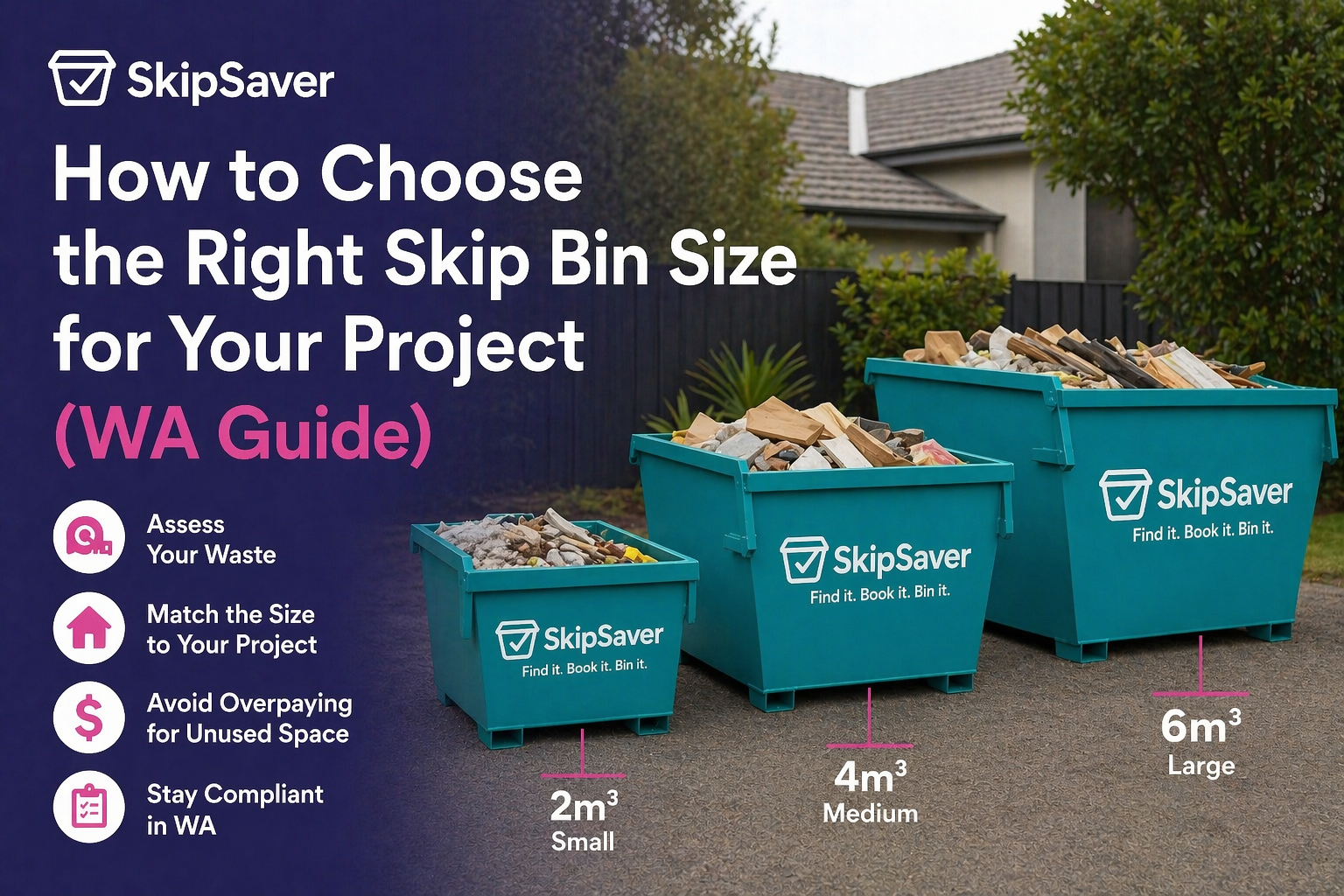
How to Choose the Right Skip Bin Size for Your Project (WA Guide)

How to Compare Skip Bin Sizes for Your Project

Hiring a skip bin is one of the easiest ways to manage waste during a clean-up, renovation, or landscaping job — but choosing the right size can feel confusing.

Too small and you’ll need another bin. Too big and you may spend more than necessary.

Here’s a simple guide to help you choose the right skip bin the first time.


1. Small clean-ups (2–3m³ bins)

Best for:

  • Garage clean-outs
  • Decluttering before moving
  • Small garden tidy-ups
  • General household rubbish

These bins are perfect if you’re doing a quick refresh around the house. They fit easily in most driveways and are the most budget-friendly option.


2. Medium projects (4–6m³ bins)

Best for:

  • Kitchen or bathroom renovations
  • Larger yard clean-ups
  • Moving house
  • Removing old furniture

This is the most popular skip size for households across Western Australia because it suits most renovation and clean-up jobs.


3. Large renovations & construction (8m³+ bins)

Best for:

  • Major renovations
  • Roof replacements
  • Landscaping projects
  • Construction waste

If you’re generating heavy or bulky materials, a larger bin can save time and multiple bookings.


4. Things many people forget before booking a skip bin

Before ordering your bin, consider:

✔ What type of waste you’re disposing of
✔ How much space you have for delivery
✔ How long you’ll need the bin
✔ Whether your waste includes heavy materials like bricks or soil

Planning ahead helps avoid delays and unexpected costs.


5. Why comparing skip bin providers saves money

Prices can vary depending on:

  • Location
  • Waste type
  • Bin size
  • Availability

Instead of calling multiple companies, comparing options online helps you find the best fit faster and often cheaper.

That’s exactly what SkipSaver was designed to do — connect you with trusted local suppliers so you can book the right bin quickly and confidently.


Ready to book the right skip bin?

Whether you’re tackling a weekend clean-up or a full renovation project, choosing the correct bin size makes everything easier.

Visit www.skipsaver.com.au to compare skip bin options near you and book in minutes. 🚛♻️

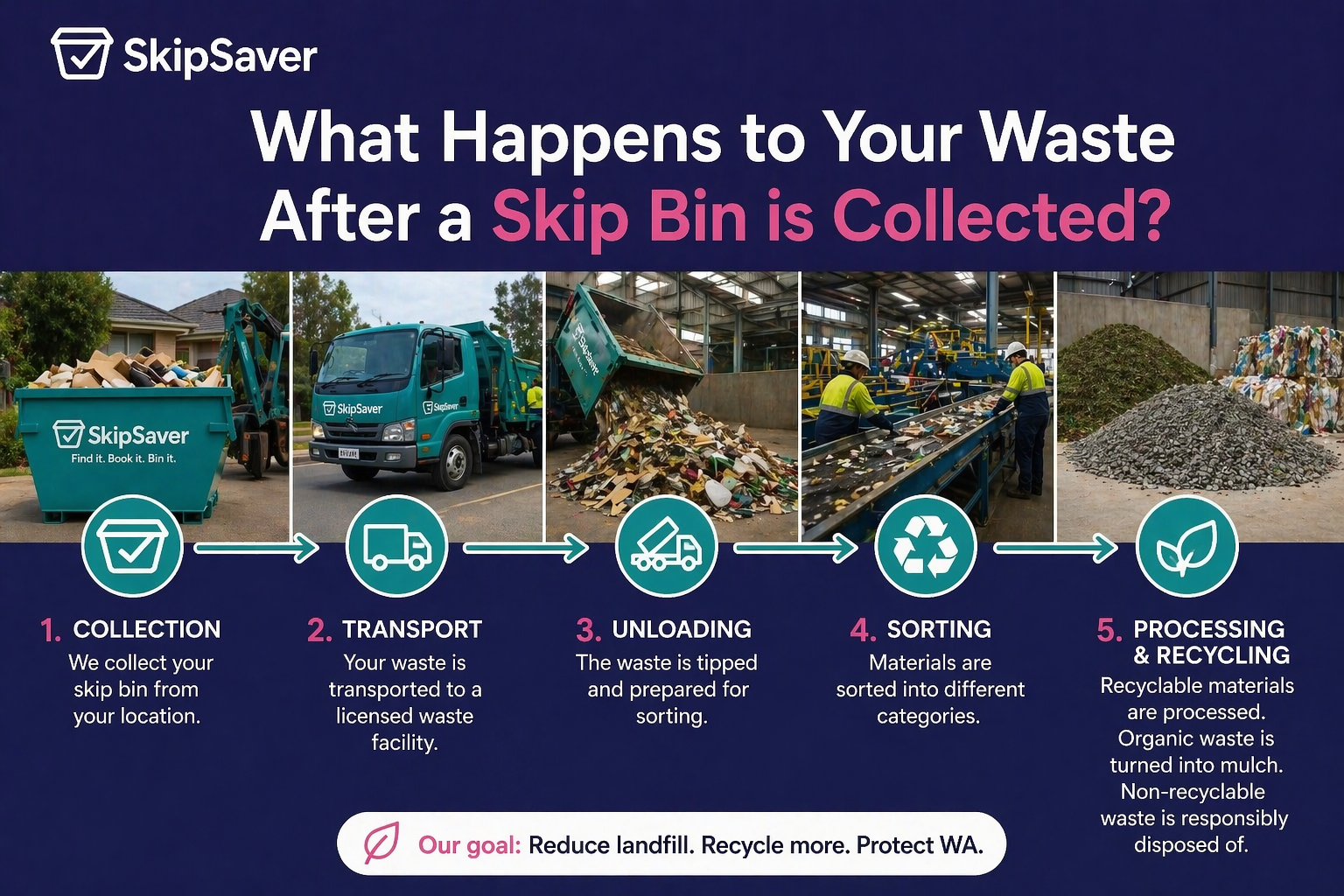
What Happens to Your Waste After a Skip Bin is Collected?

When you book a skip bin waste collection in Perth, have you ever wondered what actually happens to your rubbish? It’s a question more people are asking as environmental awareness grows — and the answer might surprise you. Modern waste management is far more sophisticated than simply dumping everything in a hole in the ground.

The Journey Begins: Collection and Transport – How Skip Bin Waste is Handled

Once your skip bin is full, the SkipSaver team collects it and transports it to a licensed waste transfer station. This first step is more important than it might seem — safe and efficient transport ensures that waste doesn’t spill, leak, or cause environmental harm along the way.

At the transfer station, your skip bin is unloaded and the real sorting process begins.

Sorting: The Key to Reducing Landfill

Not all waste is the same, and treating it that way wastes enormous potential. At the transfer station, waste is separated into distinct streams:

  • Organic waste – food scraps, garden clippings, timber offcuts
  • Recyclables – metals, concrete, bricks, glass, cardboard, and certain plastics
  • General waste – materials that cannot currently be recycled or composted

This sorting process is critical. By diverting as much material as possible away from landfill, waste management companies reduce the environmental footprint of every single bin collected.

Where Does Each Waste Type End Up?

Organic Waste

Garden waste, untreated timber, and food organics are typically sent to composting or mulching facilities. Here, they are broken down into nutrient-rich compost or mulch that gets used in agriculture, landscaping, and horticulture — giving your old garden clippings a new life in someone else’s garden.

Recyclable Materials

Metals like steel and aluminium are among the most valuable recyclables — they can be melted down and reused almost indefinitely. Concrete and bricks are often crushed into road base or fill material used in construction projects. Cardboard and paper are baled and sent to paper mills, while glass is processed into new glass products or road aggregate.

General Waste

Materials that can’t be recycled or composted are sent to licensed landfill facilities. Modern landfills are carefully engineered to minimise groundwater contamination and capture methane gas, which can be converted into energy. While landfill is the least desirable outcome, responsible operators ensure it’s managed as safely as possible.

SkipSaver’s Commitment to Responsible Waste Management

At SkipSaver, we take our environmental responsibilities seriously. We work with licensed waste facilities across Perth to ensure your waste is handled in a way that maximises recycling and minimises landfill wherever possible. When you hire a skip bin from SkipSaver, you’re not just getting a convenient way to clear out your property — you’re choosing a service that genuinely cares about what happens next.

We serve customers across Perth and the surrounding areas, and we’re proud to offer skip bins that suit everything from small home cleanouts to large construction and demolition projects.

Ready to Book a Skip Bin?

If you’re tackling a renovation, declutter, or building project and need a reliable skip bin hire service in Perth, get in touch with the SkipSaver team today. We offer competitive pricing, flexible sizing options, and a commitment to responsible waste disposal.